
Listening to Waltz for Debby
The record has been in the studio for several weeks now. While waiting for its arrival, I took the time to read up on Bill Evans: his early career with Miles Davis, the recording of Kind of Blue and subsequent departure to form a trio with Scott LaFaro and Paul Motian.
Before this group, most piano trios treated bass and drums as accompaniment for the piano. Bill had a different plan in mind. Evans, LaFaro, and Motian approached the music more like equal partners: developing ideas across solos while handing off to one another and shifting the feel based on the conversation. That conversational quality is one reason their work still feels modern.
The group recorded two studio albums together and then five sets at the Village Vanguard in June of 1961. Sadly, LaFaro died in a car accident ten days after the Village sets, leaving just four records to document their place in jazz history. The live sets were released as two LPs: Sunday at the Village Vanguard and Waltz for Debby. In forming the track lists for the two records, Evans placed all of LaFaro’s compositions onto ‘Sunday’ as a tribute to his friend. Debby stands more as a testament to the group as a whole.
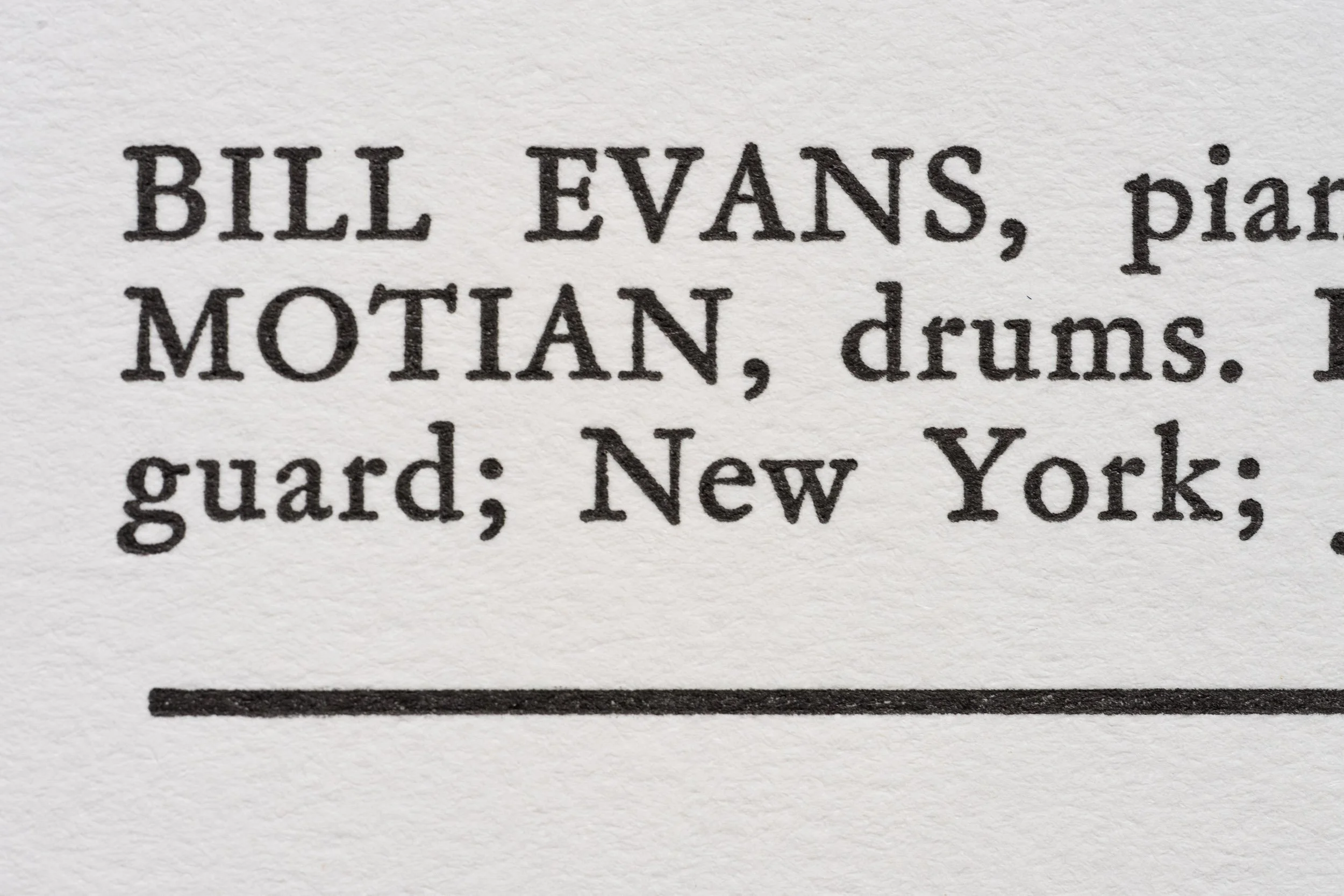
The first thing I did after pulling off the clear jacket protector was smell the liner notes on the back cover. The faint aroma of printer’s ink immediately transported me to my grandfather’s 1890s gum roller printing press. The smell of the jacket immediately took me back to standing in front of that machine and learning that the letter ‘K’ is the least used in the English alphabet. Likewise, the texture of the printing confirmed that no laser printers were harmed in the making of this record. The disc itself was unremarkable, unless you’ve never purchased a record that is perfectly flat, has a perfectly centered label, a surface that looks like it just came out of the cleaner and is quiet as a tomb, and an outer edge that feels smooth to the touch under rotation.
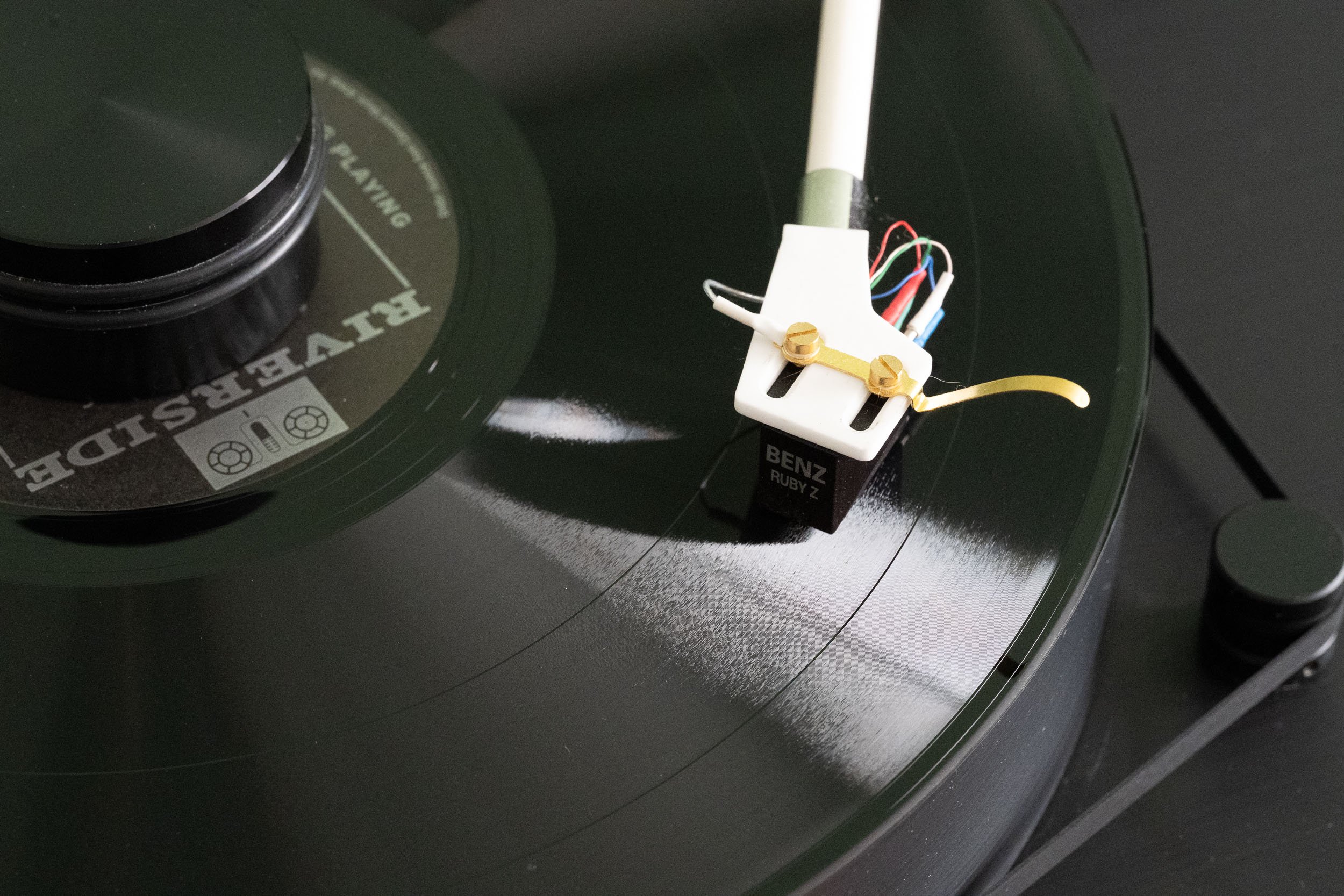
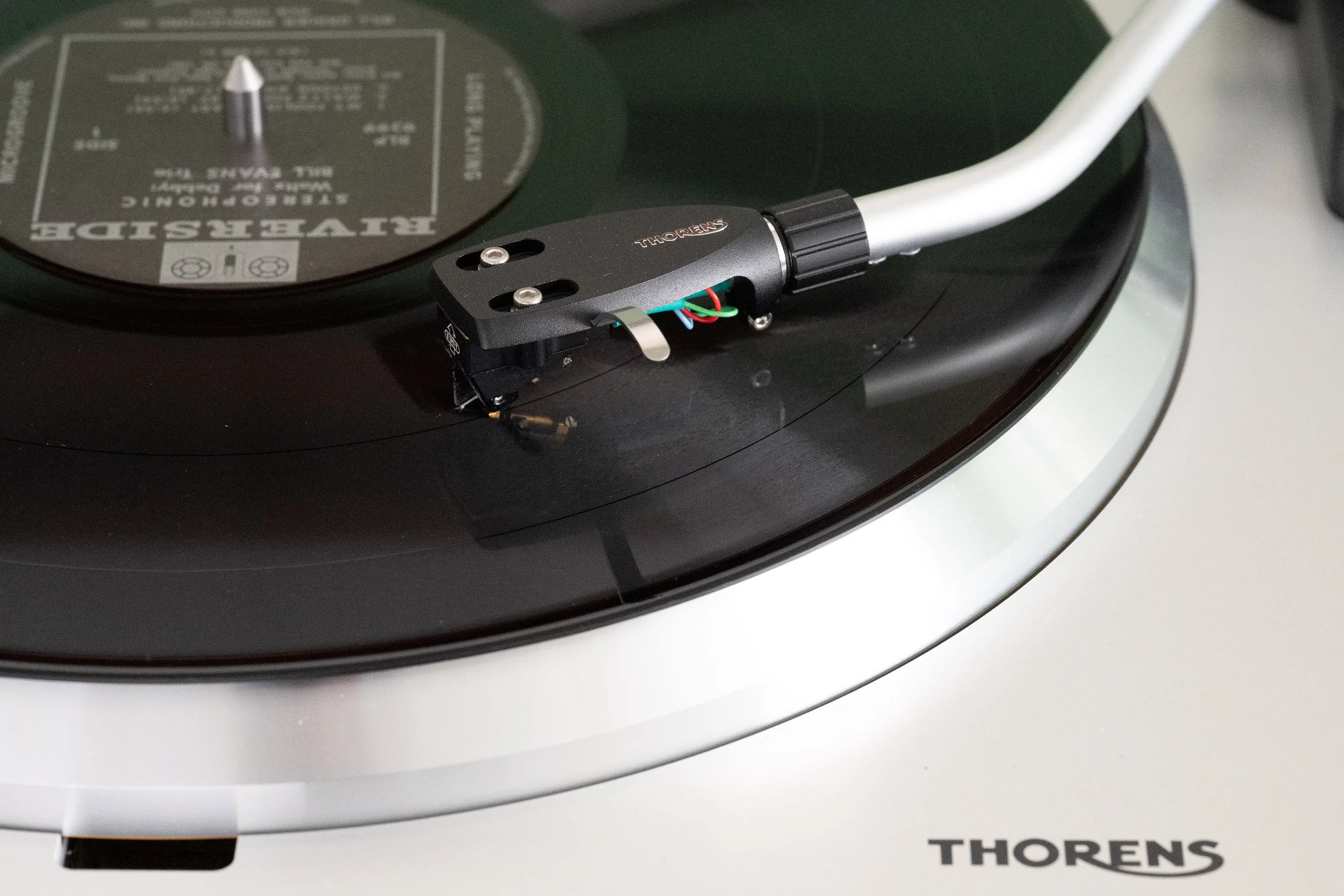
Since opening the record, I’ve played it several times, going back and forth between two setups. The Dr. Feickert Blackbird, equipped with a Korf TA-AF10 ceramic tonearm and Benz Ruby L cartridge, and the Thorens TD 404 DD with its TP 160 knife bearing tonearm and an EMT JSD Pure half coil. I’d start out with the intention of occupying analysis mode: What am I hearing? What do the two setups reveal about the recording? After all, the intention behind this project was to get to the bottom of what ERC brings to a reissue. Inevitably, my focus would drift into music mode: notes and chord structure, lines and exchanges, changes in cadence and pitch relationships. I wasn’t thinking at all about bass extension or bloom or sonics. My focus had shifted entirely to comprehending the musical ideas flowing among the performers in front of me.
Some have said that Bill Evans simultaneously gave us the template for elevator jazz and the foundation that piano trios to this day would follow. If you accept the first premise, elevators are all the better for it. To grasp the 2nd, you have to listen carefully. This music has a tendency to go down easy and over your head at the same time. In Evans’ time, his chord progressions and feel, and the way he and his band mates exchanged and developed ideas was quietly revolutionary. Today, they are the common vocabulary all aspiring jazz musicians breathe in like oxygen, mix with all the other musical molecules in the atmosphere and exhale as their own.
So, my impression. When I play this record, I am compelled to focus on the music. I can think of few other records that serve as such a transparent conduit between what went into the cutter head and what comes out of my speakers. How it does what it does just doesn’t matter. I’m simply thrilled to have this work available in a form that will keep me coming back to it for years to come. Who knows, maybe someday there will be two ERCs in my collection.