
Madison Streamer/DAC
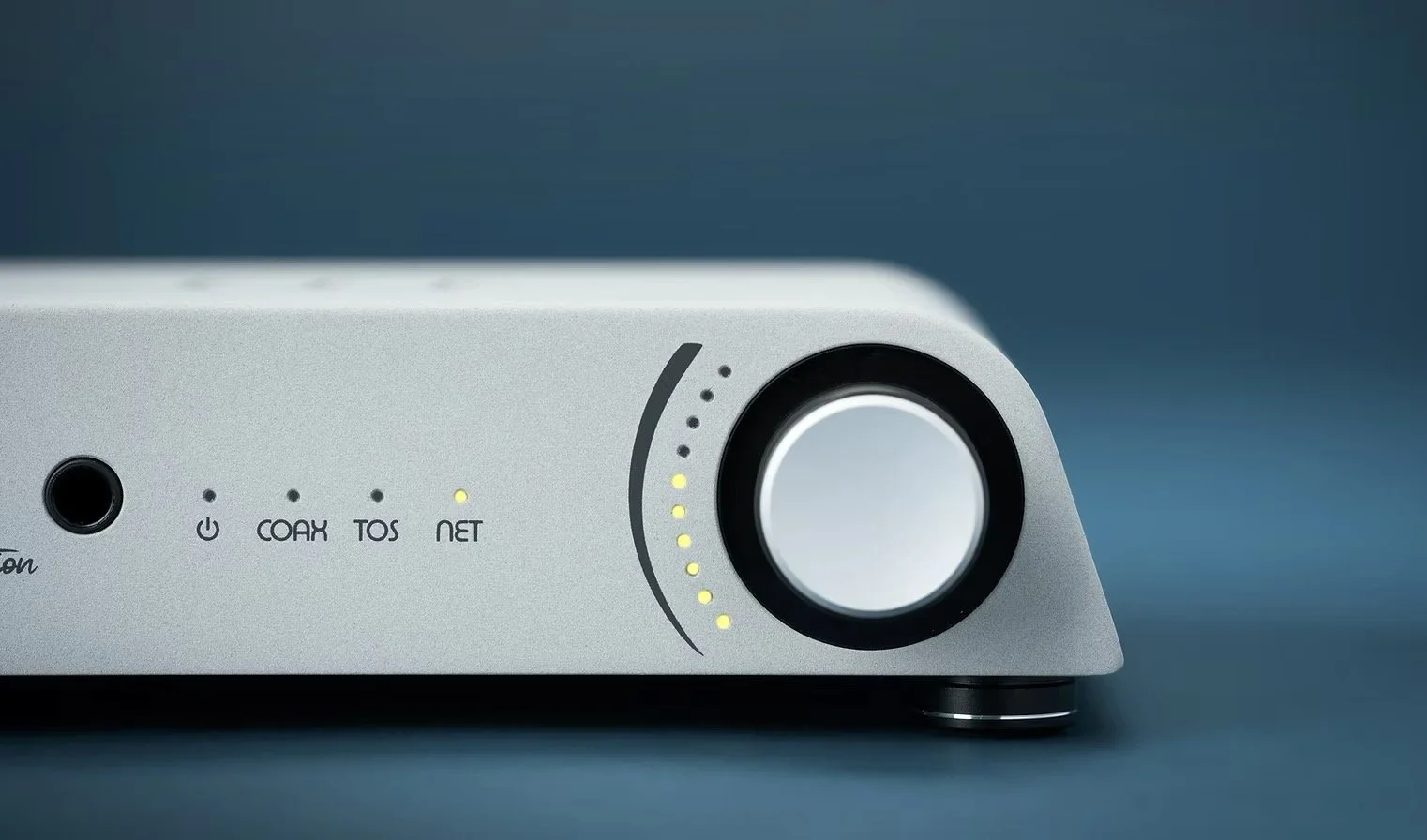
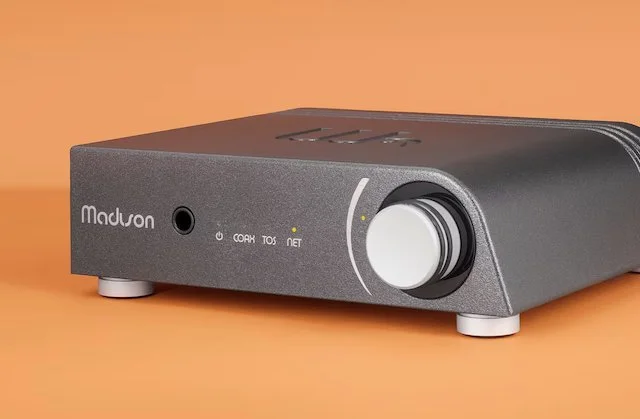
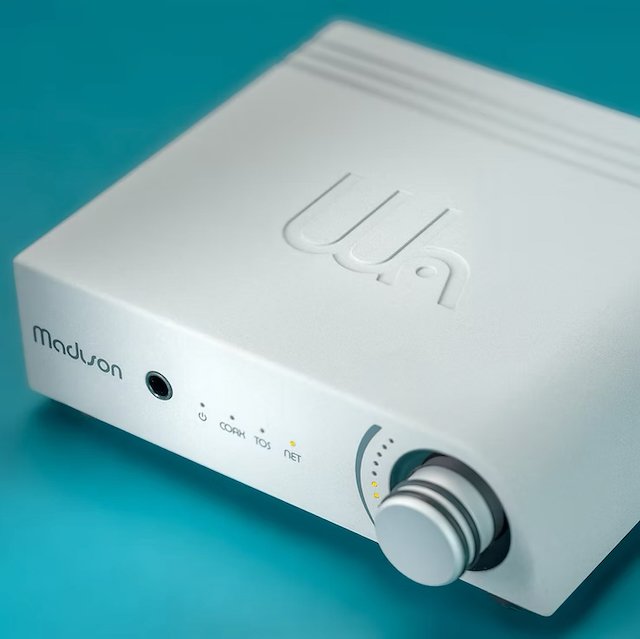
The Madison Streamer / DAC from Wattson Audio is a network audio component built around the same digital design philosophy found in CH Precision’s reference systems. Rather than chasing impressive-looking specifications, the Madison focuses on the fundamentals that determine how digital audio actually sounds: clock integrity, time-domain filtering, low-noise power architecture, and a carefully implemented analog output stage.
The result is a streamer that delivers digital playback with exceptional stability, tonal richness, and spatial realism - revealing the structure of recordings while preserving the natural flow and expressive nuance that make music compelling.
Precision Digital Processing
At the core of the Madison’s digital engine is a high-performance SHARC DSP processor. Unlike many digital designs that rely primarily on the internal filters of the DAC chip, the Madison performs its own upsampling and reconstruction filtering using Wattson’s Spline filter, derived from digital design work associated with CH Precision.
This filter emphasizes time-domain behavior rather than frequency-domain perfection. In practical terms, that means carefully controlling impulse response and minimizing pre- and post-ringing artifacts that can blur transient information.
The DSP upsamples incoming audio by eight times, allowing the spline interpolation stage to reconstruct the waveform with greater temporal precision before it reaches the DAC.
The objective is not simply higher numbers on a specification sheet, but a digital signal that preserves the natural leading edges and microdynamic cues that give music its sense of life.
Dual Master Clock Architecture
Equally important to the Madison’s performance is its clock architecture, which is designed to control jitter before the signal reaches the DAC stage.
The streamer uses two dedicated low-phase-noise oscillators:
one for 44.1 kHz–derived sample rates (44.1 / 88.2 / 176.4 / 352.8)
one for 48 kHz–derived sample rates (48 / 96 / 192 / 384)
When a stream arrives, the DSP routes the audio to the appropriate clock domain. By keeping these two sample-rate families separate, the Madison avoids the need for fractional clock conversion—a process that can introduce additional timing errors.
Incoming audio is first buffered and processed asynchronously, then reclocked against the Madison’s internal master oscillator before being sent to the DAC stage. As a result, conversion ultimately runs on the Madison’s precision internal clock rather than the timing of the incoming stream.
Maintaining this level of clock integrity reduces the tiny timing errors that can blur spatial cues, harden high frequencies, and obscure low-level detail. In listening terms, this contributes to the Madison’s stable imaging, precise soundstage structure, and natural treble presentation.
Dual-Mono Conversion and Analog Output
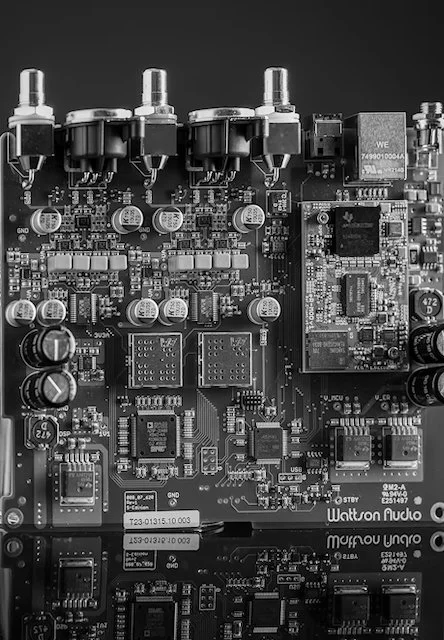
After DSP processing and reclocking, the signal is sent to a dual-mono DAC stage built around Wolfson WM8742 converters.
Each channel is handled by its own dedicated DAC, improving channel separation and reducing crosstalk. The converters are supported by a carefully designed analog output stage and Wattson’s ultra-low-noise power architecture, ensuring that the analog signal leaving the Madison preserves the timing precision established earlier in the digital pipeline. This combination of controlled digital processing, stable clocking, and a refined analog stage allows the Madison to present music with both resolution and tonal density—revealing fine detail without pushing the sound toward the etched or analytical character sometimes associated with digital playback.
A Digital Architecture Derived from CH Precision
Listening
When these architectural elements work together, the Madison produces a presentation defined by coherence, stability, and dimensionality.
Images lock firmly into place within the soundstage, and the center image gains weight and presence. Instruments take on a three-dimensional character, with space around them that is easy to perceive but never exaggerated.
Bass extends naturally and integrates seamlessly with the midrange, forming a solid foundation that allows the rest of the spectrum to unfold with ease. High frequencies remain open and refined, contributing detail and air without drawing attention to themselves.
The overall impression is one of flow and balance—a digital source that reveals the structure of a recording while maintaining the natural pacing and tonal richness that make long listening sessions rewarding.
Specifications
Network streaming resolution: PCM up to 32-bit 384kHz, DSD up to 256x (11,2896MHz)
S/PDIF input resolution: PCM up to 24-bit 192kHz
RCA output level (0dB FS): 2.0V RMS
XLR output level (0dB FS): 4.0V RMS
Signal-to-noise, weighted (SNR-A): > 120dB
Harmonic distortion (THD+N, 0dB FS): < 0.001%
Headphone output: 2x 150mW on 32Ω, 2x 50mW on 150Ω, 2x 10mW on 600Ω
Supported standards: UPnP/DLNA, AirPlay, TIDAL connect, Qobuz connect, Roon Ready, plays with Audirvāna
Streaming services brought by the Wattson Music iOS app: TIDAL, Qobuz, airable radios, DLNA server
Supported file formats: WAV, FLAC, AIFF, ALAC, MP3, AAC, Ogg Vorbis, WMA
Network input: 100Mbit/s Ethernet
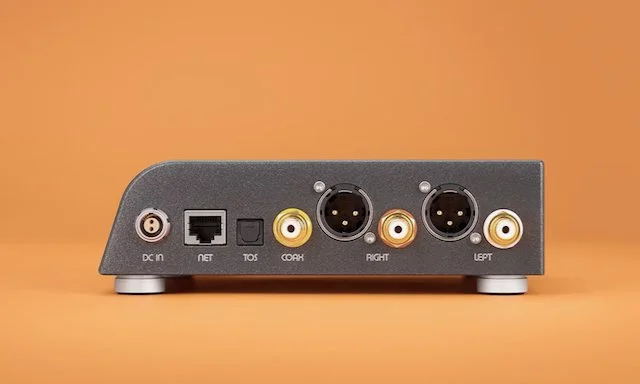
Digital inputs (S/PDIF): 1ea. on RCA and TOSLink
Analog outputs: 1ea. unbalanced RCA and balanced XLR
Headphone output: 6.35mm Jack connector
Dimensions (W x D x H): 6.9” x 7.3” x 2.1”)
Weight: 2.37 lbs
Power supply: 5V DC, external, medical grade
Power consumption: 50mW (idle), 3.5 W (playing)
Price: $5495